Great Northern Railway
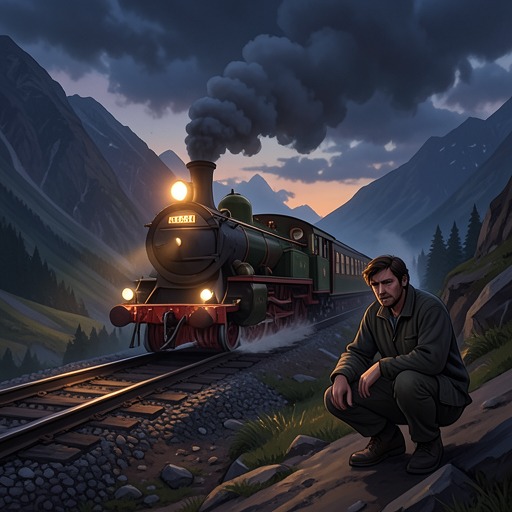
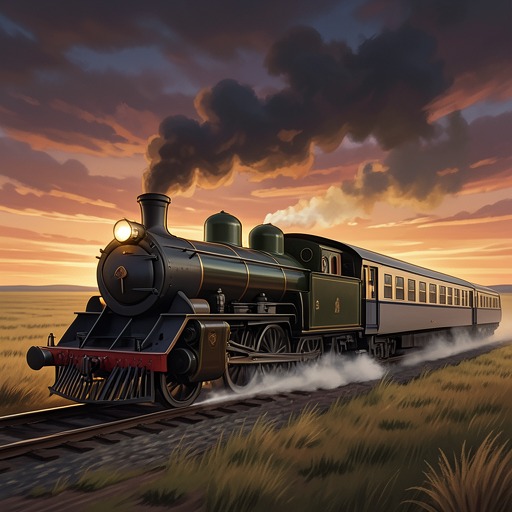
Train DreamsGreat Northern Railway functions in the narrative as both a practical network and a governing force in the landscape. Its trains deliver Robert Grainier into Fry as a child, carry him toward work and shelter throughout his life, and connect remote settlements to the expanding economy of the American Northwest. Yet the railway’s promise of connection is inseparable from the violence and extraction that make its routes possible: it participates in the removal of Chinese families, transports timber through engineered mountain corridors, remains vulnerable to wildfire, and ultimately becomes the site where Kootenai Bob’s body is destroyed.
Formation and Regional Reach
Great Northern Railway helped constitute the world into which Grainier was absorbed. In 1893, when construction of the railway had been completed, the six- or seven-year-old Grainier arrived in Fry after several days of travel, carrying his destination pinned to his chest on the back of a store receipt. He had eaten his food on the first day, but conductors kept him fed along the route. The railway therefore appears at the beginning of his remembered life as a substitute for family and as the mechanism that delivers an unidentified child to a new household.
The railway also frames the early history of Fry as a place shaped by organized movement and exclusion. Grainier’s earliest memory is of standing beside his uncle while a hundred or more Chinese families were driven from town and loaded onto three flatcars in the Bonner Lumber Company railroad yard. Men holding axes, pistols, and shotguns supervised the departure. Most of the expelled families eventually settled about thirty miles west, between Troy and Libby, in the community later known as China Basin, but by the time Grainier worked on bridges that community had dispersed. The railway thus appears not merely as a neutral carrier but as part of the infrastructure through which local populations were rearranged.
After Fry and Eatonville were combined under the name Bonners Ferry in 1899, the railway remained the town’s principal connection with work and the wider region. Grainier received his limited schooling in Bonners Ferry, then moved through jobs and settlements whose existence depended on rail access. The line’s presence helped turn a scattered frontier into a linked economic territory, even as people without secure power were moved along it or excluded from the places it served.
Engineering, Timber, and Labor
The railway’s industrial purpose becomes most visible in the bridge and logging work that occupies Grainier’s adult life. Forty-one days after the railroad gang completed the Eleven-Mile Cutoff Bridge, Grainier watched the first locomotive cross a 112-foot interval of air above a gorge sixty feet deep. A single engine proceeded slowly over the tracks while the engineer and a second waiting man managed its movement from opposite ends. Mr. Sears raised a four-shooter to signal the commencement, and the assembled men cheered as the locomotive reached the far side. The bridge eliminated a long curve around the gorge and an adjacent pass, saving Spokane International Railway the responsibility of maintaining eleven miles of rails and ties.
The crossing gives the railway a spectacular physical presence, but the scene also exposes the difference between collective achievement and individual feeling. The men shouted and celebrated the successful crossing, while Grainier felt inexplicably sad and joined the cheering anyway. The structure represents technical triumph and economic efficiency, yet its scale makes Grainier feel the emotional cost of a world being remade by machines and organized labor.
The success of the Eleven-Mile Cutoff made Grainier eager to join still larger undertakings. In 1920 he worked on repairs to Robinson Gorge Bridge, a nearly thirty-year-old structure spanning a gorge 208 feet deep and 804 feet wide. The bridge could support an engine and two flatcars of logs, but it was so wobbly and terrifying that nobody rode the cars across, not even the engineer; the brakeman caught the car at the opposite end. Great Northern Railway belongs to the same wider system of railway expansion that turned remote forests into routes for engines and timber, while the dangerous bridge reveals how much of that system depended on workers’ willingness to approach structures that technology had not made safe.
After the repairs, Grainier moved higher into the forest with Simpson Company. The railway’s tracks were intended to carry timber out of the woods, while more than forty men used six-horse teams to haul logs to the landing and within reach of the cables. At the landing, a wood-burning Steam donkey dragged logs with two iron drums, sending out its hook as the choker noosed each successive log. The horses moved in near silence beneath the machinery’s booming and groaning, and the logs then traveled by flatcar across Robinson Gorge and down the mountain toward the continental railway network. Great Northern Railway is consequently represented through a chain of coordinated labor: sawyers fell spruce, limbers clear branches, buckers cut eighteen-foot lengths, chokers attach cables, horses move the timber, and engines carry the finished loads outward.
That system converts forest, animal strength, machinery, and human bodies into transportable value. Grainier relishes the straining work and exhaustion, but his later injuries show the personal cost hidden within the network. During his final summer in the Washington woods, a wild limb knocked his jaw crooked; his joints deteriorated, his shoulder sometimes locked until another person pulled it free, and his right knee increasingly buckled. He eventually told his employer that he had become too physically unreliable to be paid for the work. His last task was tearing down old laborers’ shacks and salvaging usable lumber, after which he returned to Bonners Ferry and was finished as a woodsman. The railway economy provided his livelihood while gradually making his body unfit for the labor that sustained it.
Trains, Commerce, and Disaster
Great Northern Railway also governs Grainier’s movements after the 1920 Moyea Valley fire. Returning from the Robinson Gorge job with four hundred dollars, he traveled by passenger car as far as Coeur d’Alene and then continued by wagon through the Panhandle. By the time he reached Bonners Ferry, the fire was consuming the Moyea Valley and refugees from along the Moyea River crowded the town. Later, when the northbound Spokane International train was halted until the fire subsided and rain soaked the Panhandle, Grainier walked twenty miles toward his homesite through smoke and ash.
Ten days later, once the Spokane International was running again, he rode up into Creston and back south through the burned valley. The train crossed a landscape gutted from end to end, making a great noise that could not awaken the deadened world beneath the evening sky. The railway survives the disaster as a functioning instrument, but its motion only emphasizes the valley’s devastation. It can carry a person through the ruined region; it cannot restore the homes, forests, animals, or family that the fire has taken.
The railway remains useful in the altered economy that follows. Grainier later leased a pair of horses and a wagon from the Pinkhams and worked as a freighter along Highway 2, serving small communities without close access to railways. His freight work is defined by the railway’s absence: he carries goods where the fixed network does not reach. He eventually contracts to buy the horses and wagon for three hundred dollars, building a modest business that allows him to survive after his woodsman’s body has failed. Rail transport and wagon transport therefore operate as complementary systems, with Grainier’s local hauling filling the gaps left by the larger infrastructure.
Governance and the Death of Kootenai Bob
The railway’s capacity to regulate movement is especially stark after Kootenai Bob’s death. After Kootenai Bob lay unconscious across the tracks and was run over by four or five trains, his body was scattered for a quarter mile along the right-of-way. For two or three days afterward, Great Northern trains sounded a series of long whistles from the Meadow Creek crossing as they proceeded slowly through the area. Management had ordered the trains to give the Kootenai people time to search the tracks and collect the remaining pieces of their relative without further disarrangement.
This response is both procedural and mournful. The railway does not stop being a machine of schedules and transport, but its management temporarily modifies its operation to accommodate a community’s burial work. The long whistles mark an institutional recognition of the death, while the slow passage of trains acknowledges the Kootenai people’s presence on land the railway has crossed and reorganized. At the same time, the need for such an accommodation exposes the railway’s lethal indifference: the same system that briefly slows for the collection of remains has already transformed a man into fragments along its right-of-way.
The whistles also trigger an enlarging animal chorus. Coyotes begin, wolves answer, and Grainier’s missing red dog joins the sounds somewhere beyond his sight. The railway’s signal produces a response from the altered environment around it, turning industrial noise into a summons to animals, memory, and grief. Afterward, Grainier vows to remain in the valley, even though its ecology has changed: spruce has given way mostly to scraggly jack pine, wolves are heard less often and farther away, coyotes have multiplied, rabbits have declined, and trout have disappeared from long stretches of the Moyea River.
Narrative Significance
Great Northern Railway embodies the contradictory modernity of Grainier’s life. It gives him food when he is an abandoned child, carries him toward employment, links logging camps to distant markets, and makes seasonal survival possible. Its bridges and trains are marvels of construction, yet their grandeur rests on hazardous labor, timber extraction, and the conversion of remote places into corridors of industrial use.
The railway also makes social power visible. It helps remove Chinese families from Fry, channels refugees and workers during regional crises, and defines which communities have direct access to commerce. Its routes connect people while also sorting them by race, labor, settlement, and economic usefulness. In this sense, Great Northern Railway is less a background object than a material form of regional governance.
Finally, the railway carries a deep irony: it promises continuity through movement, but the most unforgettable scenes associated with it concern rupture. A child loses an unknown past when the train brings him to Fry; a family disappears during the Moyea Valley fire; a bridge crossing celebrates industrial connection while leaving Grainier sad; and Kootenai Bob’s death turns the tracks into a place of dismemberment and ritual recovery. Great Northern Railway is therefore the infrastructure through which the world expands, and also the instrument that reveals what that expansion costs.